
Benefits & Dangers of Philosophy
Explore how philosophy, when approached with discernment and humility, can serve as a valuable tool in pastoral ministry to deepen understanding and engage with the complexities of faith and the world.
Transcript
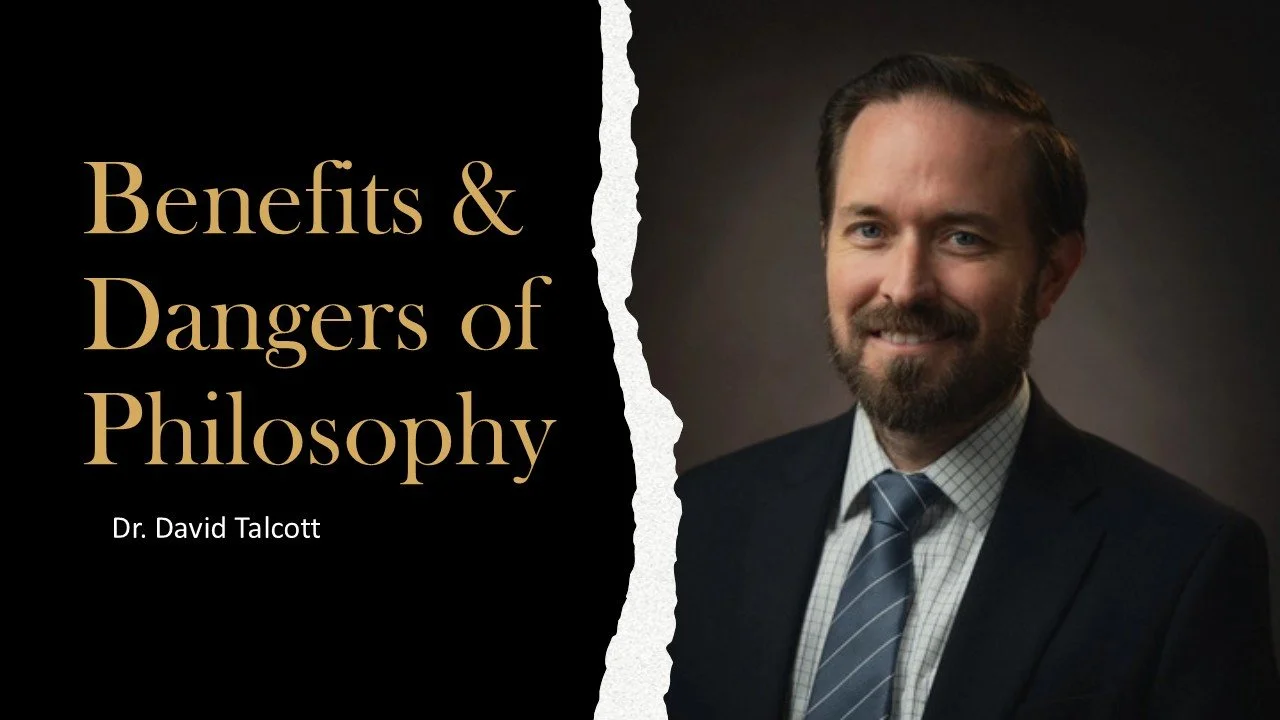
Today, we’re going to explore the relationship between philosophy and pastoral ministry. Specifically, I want to address the question: Can philosophy be a help or a hindrance to those called to serve the Church?
To begin, we need to define what we mean by philosophy. Broadly speaking, philosophy is the study of fundamental questions about reality, knowledge, ethics, and meaning. It’s an attempt to think carefully and critically about the big questions of life.
In that sense, philosophy is something we all do, whether we realize it or not. Every time we ask questions like “What is truth?” or “What is the right thing to do?” we’re engaging in philosophical thinking.
But there’s also a more technical sense of the word, which refers to the academic discipline of philosophy. This is where things can get tricky for Christians, because the history of philosophy is a mixed bag. On the one hand, there are philosophical ideas that align with biblical truth and can help us better understand and articulate our faith. On the other hand, there are ideas that are deeply at odds with a Christian worldview and can lead us astray if we’re not careful.
That’s why it’s so important to approach philosophy with discernment. As the Apostle Paul warns in Colossians 2:8, we must “see to it that no one takes [us] captive through hollow and deceptive philosophy, which depends on human tradition and the elemental spiritual forces of this world rather than on Christ.”
Notice that Paul doesn’t say we should avoid all philosophy. Instead, he warns against a certain kind of philosophy—one that is hollow, deceptive, and not rooted in Christ.
So, how do we distinguish between philosophy that is helpful and philosophy that is harmful? I would suggest three principles.
First, philosophy should always be subordinate to Scripture. God’s Word is our ultimate authority, and any philosophical idea must be tested against it. If an idea contradicts Scripture, it must be rejected.
Second, philosophy should be used as a tool for understanding and applying God’s truth. When rightly used, philosophy can help us clarify our thinking, evaluate arguments, and engage with the world around us in a way that honors God.
Third, philosophy should be approached with humility. The goal is not to become puffed up with knowledge but to grow in wisdom and love for God and others.
These principles can guide us as we think about the role of philosophy in pastoral ministry.
Now, let me address a potential concern. Some might wonder whether it’s even worth the effort to engage with philosophy, given its potential dangers. My answer is that it depends on your calling and context.
Not every pastor needs to be a philosopher, just as not every pastor needs to be an expert in Greek or Hebrew. But every pastor does need to be equipped to think critically and biblically, and philosophy can help with that.
In addition, there are times when philosophical engagement is unavoidable. For example, when defending the faith against secular ideologies or addressing moral and ethical issues, we often find ourselves interacting with philosophical ideas. In such cases, having some familiarity with philosophy can be immensely helpful.
Let me illustrate this with an example from church history. Augustine of Hippo, one of the greatest theologians in the history of the Church, was deeply influenced by philosophy. Before his conversion, he studied Neoplatonism, and after his conversion, he used insights from this philosophical tradition to develop his theology.
Augustine’s writings on topics like the nature of God, the problem of evil, and the relationship between grace and free will have had a profound and lasting impact on the Church. Yet Augustine always subordinated philosophy to Scripture. He famously wrote, "Let every good and true Christian understand that wherever truth may be found, it belongs to his Master."
This is the right attitude to have: an openness to truth, combined with a firm commitment to the authority of God’s Word.
In conclusion, my hope is that this discussion has helped you see both the benefits and dangers of philosophy for pastoral ministry. Philosophy is not something to be feared or ignored, but it is something to be approached with caution and discernment.
When used rightly, it can be a valuable tool for understanding and applying God’s truth in a complex world.
Thank you for your attention, and may God bless you as you continue to serve Him in your studies and ministries.